YUNNAN, CHINA / PRIMARY ENGLISH
From Display
to Pedagogy.
Co-designing Digital Resource Adaptation for Primary English Teaching in Rural Yunnan
A proposed four-month project exploring how teachers can collaboratively adapt digital resources for locally meaningful primary English teaching within an acceptable preparation workload.
Proposed project · Prepared design artefacts · Not yet implemented
How might a small group of teachers collaboratively adapt existing digital resources for locally meaningful primary English teaching within an acceptable preparation workload?
↓1. Project Summary
From Display to Pedagogy is a proposed four-month project supporting teachers to adapt digital educational resources for English teaching in a rural primary school near the China–Myanmar border in Yunnan Province. It draws on my previous experience as a volunteer English teacher and asks how existing materials can become educationally useful and locally meaningful within an acceptable preparation workload.
The school already uses digital presentations and multimedia resources and has established collective planning and lesson-review arrangements. Nevertheless, adaptation involves balancing curriculum objectives, pupils’ experiences, language accuracy and preparation demands. Some teachers teach English alongside other subjects and accompany the same class across year levels. Shared resources may reduce duplicated work while requiring further changes for individual classes; specialist guidance may improve quality while increasing dependence on one teacher. These interacting priorities make the challenge resistant to a single technical solution.
The provisional design question is: How might a small group of teachers collaboratively adapt existing digital resources for locally meaningful primary English teaching within an acceptable preparation workload? The project addresses selected lessons rather than wider staffing shortages or the whole curriculum.
The Double Diamond will structure Discover, Define, Develop and Deliver. Teachers will investigate existing practices, agree on a priority and design criteria, compare small prototypes, and undertake limited trials before deciding on continued use. Earlier decisions may be revisited throughout. Subject to agreement, the specialist English teacher will lead, with two or three voluntary non-specialist teachers as co-designers. I will contribute as a returning volunteer, supporting preparation, facilitation and documentation. Pupils will contribute through classroom responses and feedback; school leadership will be consulted about organisational arrangements.
Existing classroom technologies will be used. Suitable openly licensed resources will be considered, and generative AI may be explored as an optional drafting aid under teacher review. The intended outcome is a locally reviewed adaptation approach with documented decisions and limitations, rather than proof of sustained learning gains.
The school context and retrospective teaching experiences are real. However, project participation remains hypothetical and unconfirmed. The interview guide, review templates, provisional problem map and illustrative teaching script in Appendices A–J have been prepared as assessment artefacts. Consultation, co-design sessions and classroom trials have not occurred, and the teaching script has not yet been developed into a complete illustrated slide resource.
2. Project Context and the Wicked Problem
2.1 Teaching Context and Existing Practices
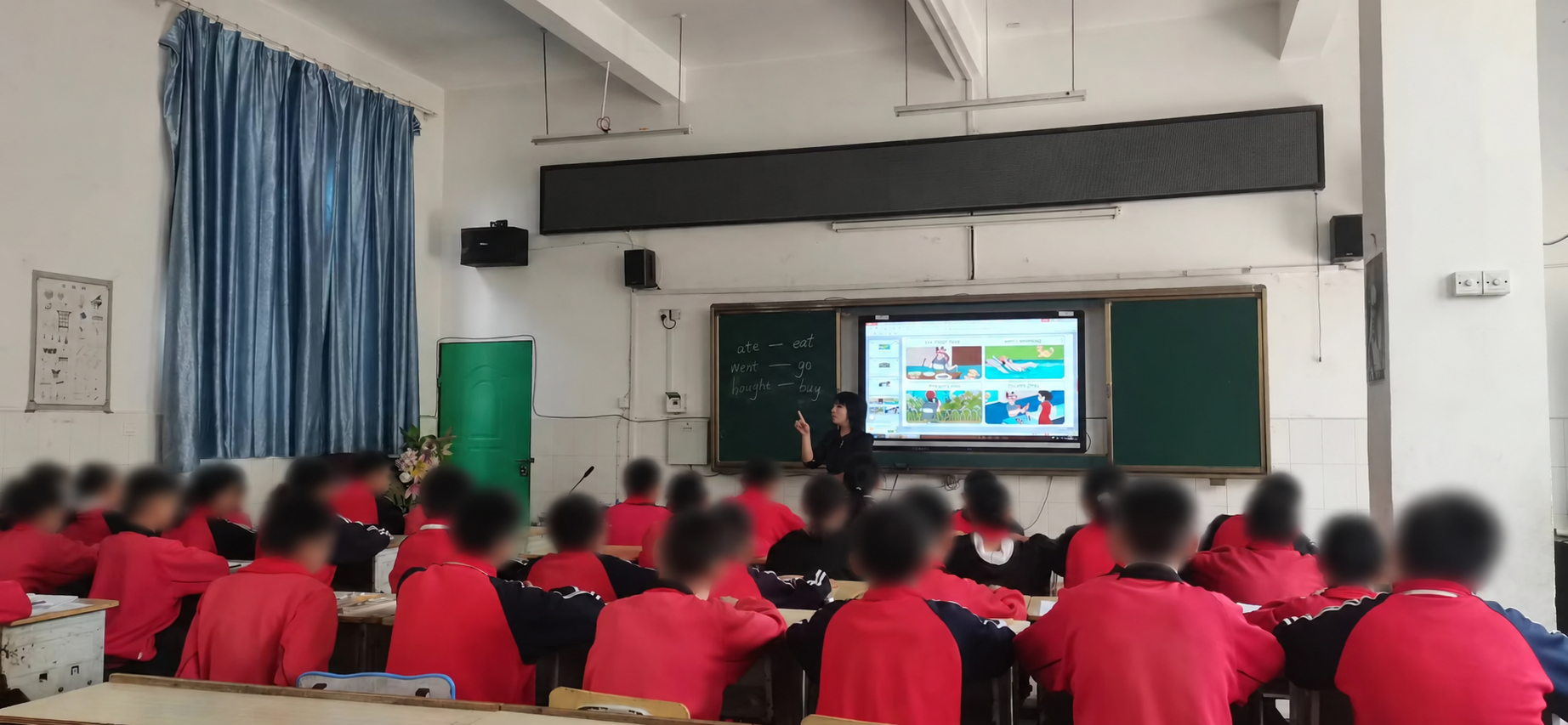
During my volunteer teaching, downloaded presentations, images, audio and videos supported preparation and classroom teaching. Their availability did not remove the need for professional judgement. Wu et al. (2022) examine rural Chinese teachers’ resource use in relation to teacher- and school-level ICT training. Their research supports considering professional support alongside resource availability, although it cannot establish this school’s particular needs.
The school has an experienced specialist English teacher, while some English teaching is undertaken by colleagues whose main expertise lies elsewhere. These teachers may teach several subjects to the same class and continue with it across year levels. Their English preparation therefore changes alongside the cohort, within competing subject responsibilities.
Professional collaboration already exists. Collective planning at the beginning and middle of the semester establishes teaching schedules and curriculum priorities. A weekly professional discussion period is supplemented by office conversations and WeChat exchanges. Following an observed lesson, colleagues discuss strengths and weaknesses and suggest improvements. The presenting teacher generally revises independently, while later lesson reviews may revisit earlier advice. The proposed project builds on these arrangements by examining how discussion can produce practical, reusable adaptation support.
2.2 Adaptation as Situated Professional Judgement
My teaching illustrates why adaptation involves more than presentation design. In a sequence connecting weather, clothing and seasons, I used animations and physical actions to introduce weather vocabulary. Similar visual styles in the following unit connected familiar expressions with clothing choices and seasons. Because snow was uncommon locally, animation provided a reference point for an experience pupils might not have encountered directly.
Other resources required different changes. Downloaded household-cleaning presentations sometimes showed vacuum cleaners, whereas bamboo brooms were more familiar locally. Cleaning household windows also differed from some pupils’ experiences, so I used school-cleaning photographs to establish a recognisable context. These are retrospective accounts of my decisions, not evidence of improved learning or practices shared by colleagues.
Tomlinson (2012) situates materials development within language learning and teaching, while Guerrettaz et al. (2022) direct attention to materials use in classroom activity. Together, these perspectives justify examining the relationship between a resource, its learning purpose and particular learners. Local familiarity is therefore one criterion alongside language accuracy, curriculum alignment and meaningful participation. An unfamiliar example is not automatically unsuitable; its purpose and necessary explanation must be considered.
2.3 The Wicked Problem and Project Boundary
Rittel and Webber (1973) describe wicked problems as resistant to definitive formulation and solutions that are simply correct or incorrect. Here, detailed adaptation may improve relevance while increasing preparation time. Shared materials may reduce duplication while fitting some classes better than others. Specialist support may build confidence while concentrating responsibility on one colleague.
Resource providers influence available examples and permissions; school arrangements influence preparation time; families and local conditions shape pupils’ experiences; and classroom responses influence subsequent teacher decisions. The provisional relationship map in Appendix D makes these connections and possible feedback cycles explicit. They remain propositions for stakeholder checking rather than verified causal relationships.
The project will work with a small voluntary group and a manageable selection of lessons over four months. It will investigate whether collaborative adaptation support is useful and feasible. It will not claim to resolve national staffing policy, provide new infrastructure or establish long-term achievement effects. The provisional question may be refined if participating teachers identify a different priority.
Provisional Problem Relationship Map
Provisional relationships based on retrospective experience, awaiting stakeholder checking.
within an acceptable workloadPupils’ experiences
Select a relationship to explore its tension.
Explore six more relationships
Providers ↔ Teachers
Formats, examples and permissions shape options; available materials may not reflect local needs
Teachers ↔ Pupils
Teachers interpret needs; pupil responses may challenge resource choices
Home experiences ↔ Classroom examples
Familiarity varies; some experiences may be overlooked
Specialist ↔ Non-specialists
Guidance supports quality but may concentrate authority and workload
Leadership ↔ Teacher workload
Timetabling enables collaboration while other priorities compete for time
Shared resources ↔ Individual classes
Reuse reduces duplication but may require further changes
Adaptation ↔ Preparation time
Greater suitability may require greater effort
Technology ↔ Activities
Equipment enables some activities while constraining formats and interaction
Licensing ↔ Sharing
Permissions determine what can be modified and redistributed
Read all relationships and feedback cycles
Status: Relationship propositions based on retrospective experience, awaiting stakeholder checking.
| Connection | Relationship or tension |
|---|---|
| Providers ↔ Teachers | Formats, examples and permissions shape options; available materials may not reflect local needs |
| Teachers ↔ Pupils | Teachers interpret needs; pupil responses may challenge resource choices |
| Home experiences ↔ Classroom examples | Familiarity varies; some experiences may be overlooked |
| Specialist ↔ Non-specialists | Guidance supports quality but may concentrate authority and workload |
| Leadership ↔ Teacher workload | Timetabling enables collaboration while other priorities compete for time |
| Shared resources ↔ Individual classes | Reuse reduces duplication but may require further changes |
| Adaptation ↔ Preparation time | Greater suitability may require greater effort |
| Technology ↔ Activities | Equipment enables some activities while constraining formats and interaction |
| Licensing ↔ Sharing | Permissions determine what can be modified and redistributed |
Potential support cycle: Shared examples → less duplicated preparation → more capacity to contribute → stronger shared collection.
Potential workload cycle: More requests → greater specialist workload → slower feedback → reduced participation → more individual preparation.
Checking prompts: Which relationships are supported by examples? Which are missing or contested? Neither cycle is a verified finding.
3. Design Rationale and Methodological Approach
3.1 Adapting the Double Diamond
The Design Council’s (n.d.) Double Diamond distinguishes investigating a challenge from developing responses through Discover, Define, Develop and Deliver. This is useful because the appropriate support has not yet been established. A checklist, annotated example or shared collection should not become the agreed solution before teachers examine their needs. The model is used as a Design Thinking framework, not as a Design-Based Research methodology.
Panke (2019) reviews both opportunities and challenges of Design Thinking in education. This supports using the framework critically: its activities organise inquiry but do not guarantee improvement. Discover will examine actual resource choices; Define will establish a bounded problem and criteria; Develop will compare prototypes; and Deliver will test feasibility. Evidence may require movement back to earlier phases.
Activities will use agreed portions of existing professional discussion time. The timetable in Appendix A provides direction without assuming a linear process or requiring teachers to adopt a separate programme of meetings.
The Double Diamond
Understand the challenge: Discover (diverge) → Define (converge). Develop the response: Develop (diverge) → Deliver (converge). Revisit earlier decisions when evidence changes.
Discover: Understand existing practices
- Timing
- Month 1, Weeks 1–3
- Main activities
- Brief individual conversations and a shared resource walkthrough.
- Expected output
- Checked summaries, revised problem map and a shortlist of challenges.
Define: Agree a manageable priority
- Timing
- Month 1, Week 4 to Month 2, Week 2
- Main activities
- Compare concerns, select a priority and negotiate criteria and preparation workload.
- Expected output
- An agreed design brief and prototype review criteria.
Develop: Explore and revise alternatives
- Timing
- Month 2, Week 3 to Month 3, Week 2
- Main activities
- Generate alternatives, prepare two small prototypes and conduct colleague walkthroughs.
- Expected output
- Reviewed prototypes and a revised version ready for a limited trial.
Deliver: Review usefulness and feasibility
- Timing
- Month 3, Week 3 to Month 4
- Main activities
- Limited classroom trials, revision and a decision about continued use.
- Expected output
- Trial records, revision history, updated prototype and feasibility statement.
3.2 Teachers as Co-designers
Sanders and Stappers (2008) position co-design as involving people in creating responses to their situations. Teachers will therefore help define the challenge, propose alternatives and determine revisions. Voogt et al. (2015) examine collaborative design as professional development, while McKenney et al. (2015) relate teacher design knowledge to contextual assets and needs. Together, these perspectives support documenting why teachers change a resource and what that change is intended to achieve.
Subject to agreement, the specialist English teacher will lead because of her local knowledge and teaching guidance experience. Two or three non-specialist teachers will contribute examples and judgements. As a returning volunteer, I will support preparation and documentation rather than assume school leadership.
Wenger-Trayner and Wenger-Trayner (2015) identify a shared domain, community and practice as central to communities of practice. An existing WeChat group is therefore not sufficient evidence of such a community. Trust et al. (2016) examine teachers’ professional learning networks, offering a complementary perspective on learning through connections. For this project, digital exchanges will support continuing discussion, while shared adaptation work will give that discussion a practical focus. Desimone (2009) and Darling-Hammond et al. (2017) further justify linking professional learning with subject content, active participation, collaboration and feedback.
3.3 Open Resources and Responsible Technology Choices
Digital educational resources (DER) are not necessarily open educational resources (OER). UNESCO (2019) defines OER through public-domain status or licensing that permits access, reuse, adaptation and redistribution. A freely downloadable presentation may still restrict modification or sharing.
Arispe and Hoye (2023) offer an example of language-education collaboration around OER, while Beaven (2018) examines teachers’ engagement with reuse. Cronin’s (2017) higher-education research further positions openness as a contextual practice. These sources suggest that availability alone is insufficient: teachers also need opportunities to interpret, adapt and make decisions about sharing. Their findings cannot simply be transferred to this school. Resources will be assessed for permissions, editability, language accuracy, curriculum fit and local usefulness.
Generative AI may support initial wording, scenarios or activity ideas. Miao and Holmes (2023) provide a basis for human oversight and attention to educational suitability. Teachers will check all outputs and avoid entering identifiable pupil information. AI will remain optional and will be abandoned if verification creates more work than it saves. The initial evaluation will address usefulness and workload rather than tool adoption or assumed learning gains.
4. Detailed Project Design and Implementation Plan
4.1 Organisation and Implementation Status
The project will run for four months, subject to school agreement and voluntary participation. The specialist teacher will coordinate and support subject accuracy. Participating teachers will identify priorities and review adaptations. I will prepare agreed materials and document decisions. Responsibilities, available meeting time and preparation expectations will be negotiated before implementation.
Three evidence categories remain distinct. The classroom examples are retrospective personal accounts. Appendices A–J are prepared design materials, including explicitly hypothetical examples. Interviews, collaborative decisions and classroom trials are proposed activities, with no outcomes claimed. Appendix I will connect future stakeholder contributions to revisions. Participants will jointly decide whether to proceed, revise or revisit the problem statement.
Four-Month Implementation Timeline
All timings and participation arrangements are proposed and subject to agreement.
Select a phase to read its timing and activities. Phases cross month boundaries.
Discover · Month 1, Weeks 1–3
Brief individual conversations and a shared resource walkthrough. Checked summaries, revised problem map and a shortlist of challenges.
Read activities, responsibilities and review points ↗Define · Month 1, Week 4 to Month 2, Week 2
Compare concerns, select a priority and negotiate criteria and preparation workload. An agreed design brief and prototype review criteria.
Read activities, responsibilities and review points ↗Develop · Month 2, Week 3 to Month 3, Week 2
Generate alternatives, prepare two small prototypes and conduct colleague walkthroughs. Reviewed prototypes and a revised version ready for a limited trial.
Read activities, responsibilities and review points ↗Deliver · Month 3, Week 3 to Month 4
Limited classroom trials, revision and a decision about continued use. Trial records, revision history, updated prototype and feasibility statement.
Read activities, responsibilities and review points ↗View full schedule, responsibilities and review points
EL = specialist English teacher; PT = participating teachers; VD = volunteer co-designer. All roles and dates require agreement.
| Timing | Activity | Responsibility | Output and review point |
|---|---|---|---|
| Month 1, Week 1 | Introduce project and select existing resources | EL coordinates; all agree | Participation arrangements; are expectations clear? |
| Month 1, Weeks 2–3 | Conversations and resource walkthrough | VD documents; PT contribute | Checked summaries and map; are different experiences represented? |
| Month 1, Week 4 to Month 2, Week 2 | Prioritise and agree criteria | EL facilitates; all decide | Design brief; is the focus manageable? |
| Month 2, Weeks 3–4 | Prepare two alternatives | PT and VD design; EL reviews | Prototypes; do they address the brief? |
| Month 3, Weeks 1–2 | Colleague walkthrough and revision | All participants | Revised prototype; ready for trial? |
| Month 3, Weeks 3–4 | Classroom trials | PT teach; VD supports | Trial records; what needs revision? |
| Month 4, Weeks 1–2 | Revise and optionally retrial | All participants | Updated prototype; did changes help? |
| Month 4, Weeks 3–4 | Review feasibility | EL and PT decide; VD records | Continue, revise, pause or discontinue |
4.2 Discover: Understanding Resource Adaptation
Month 1, Weeks 1–3
Discover will investigate how teachers select resources, what already works and where support may be useful. My experiences will provide prompts rather than a predetermined account of colleagues’ difficulties. This reflects the Design Council’s (n.d.) emphasis on understanding a challenge before defining a response.
In Week 1, the specialist teacher and I will explain participation and documentation arrangements. Each teacher will bring one existing resource that was used unchanged, modified or rejected. No newly prepared material will be required. During Weeks 2–3, I will conduct brief individual conversations using Appendix B and support a shared walkthrough using Appendix C.
Individual conversations provide space to describe uncertainties before collective discussion. Questions address the learning objective, reasons for resource selection, changes considered, preparation demands and existing support. The walkthrough examines how the resource functions within an activity rather than judging visual appeal alone. This focus draws on Guerrettaz et al. (2022) and McKenney et al. (2015). My weather and cleaning examples will be introduced only after participants share their own accounts, reducing the risk of directing discussion towards my preferences.
With permission, I will prepare anonymised notes that teachers can correct or remove before finalisation. Identifiable pupil information and photographs will not be collected. Claims about pupils will be identified as teacher interpretations requiring further examination. The outputs will be checked summaries, a revised relationship map and a shortlist of challenges. Progression requires participants to confirm that these represent their differing experiences fairly.
4.3 Define: Agreeing on Priorities and Criteria
Month 1, Week 4 to Month 2, Week 2
Define will turn the checked accounts into a shared design brief. Rittel and Webber (1973) explain that problem formulation shapes possible responses. The group will therefore compare interpretations before selecting a priority.
I will summarise recurring concerns, strengths and differences, linking each concern to an example or account. The specialist teacher will facilitate discussion, inviting every participant to explain their priority. The group will consider educational importance, relevance across participating classes and feasibility within four months. Contextual adaptation, clearer instructions and reduced preparation demands are possible directions, not established findings. Unselected concerns and disagreements will remain documented.
Appendix E will record the agreed users, lessons, problem, boundaries and resources. Appendix F proposes criteria covering learning alignment, language accuracy, comprehensibility, participation, usability, workload, technology compatibility and permissions. Teachers will agree on an acceptable preparation-time allowance. Desimone’s (2009) emphasis on coherence with teachers’ work supports negotiating this expectation within existing responsibilities.
Each criterion will be paired with evidence: time logs for preparation demands, specialist review for accuracy, colleague walkthroughs for usability and later pupil responses for comprehensibility. These sources will inform judgements rather than produce a single success score. Participants will approve the brief before development, while retaining the option to revise it if prototypes reveal a mistaken assumption.
4.4 Develop: Comparing and Revising Prototypes
Month 2, Week 3 to Month 3, Week 2
Develop will compare small alternatives rather than immediately create a complete resource collection. Drawing on co-design and collaborative professional learning (Sanders & Stappers, 2008; Voogt et al., 2015), participants will suggest approaches individually before collective discussion. Depending on the brief, alternatives might include annotated examples, short adaptation prompts or a structured review conversation. The group will select two contrasting approaches using the agreed criteria.
I will prepare initial versions with teachers, recording the original feature, change and intended purpose. Sources and permissions will be checked; permission for one classroom use will not be assumed to permit public redistribution. If AI is explored, its contribution will be recorded and reviewed by the specialist teacher.
Appendix G provides a designer-prepared cleaning-activity script based on my experience. It illustrates adaptation reasoning but has not been selected by stakeholders, trialled or completed as an illustrated slide resource. It may be revised or rejected during implementation.
A colleague who did not prepare each prototype will explain how they would use it, identify unclear steps and estimate required changes. Appendix F will structure feedback against the criteria. The team will retain, combine, revise or reject alternatives and record reasons in Appendix I. Unresolved accuracy, permission or privacy issues must be addressed before the intended use. The outputs will be reviewed prototypes and a revised version ready for a limited classroom trial.
From a resource choice to a teaching decision
Illustrative adaptation based on Appendix G. Not classroom-tested; curriculum alignment remains to be confirmed.
Vacuum-cleaner context
Illustrative reconstruction of a less familiar household-cleaning example, not an original textbook or slide.
A broom in the classroom
Provisional target: “Sweep the floor”, subject to textbook confirmation.
A language decision, too. Sweeping and vacuuming are different actions. Changing an image must not leave an inaccurate label. Familiarity does not guarantee better learning.
Explore the four steps of the teaching script.
Establish the situation
Display “Our classroom needs cleaning. What can we do?” Invite accessible responses. Introduce a broom through mime, a safe demonstration or an appropriately permitted illustration.
Connect meaning and language
Display “Sweep the floor.” Model the phrase and action. Invite pupils to identify what is being cleaned and repeat or perform the action.
Guided practice
Model “A: What can we do? B: Sweep the floor.” In pairs, one pupil speaks and the other mimes; then they change roles. Adjust sentence demands to the class and curriculum.
Check meaning
Ask each pupil to select which of two demonstrated cleaning actions matches “sweep the floor” before hearing classmates’ answers. Invite brief explanation or demonstration. This checks immediate phrase–meaning understanding, not independent reading, spelling or retention.
4.5 Deliver: Trialling and Reviewing Feasibility
Month 3, Week 3 to Month 4
Each participating teacher will be invited to trial the revised prototype in one suitable lesson, with an optional second trial after revision. The specialist teacher will coordinate lesson selection, and I will support documentation. Before teaching, participants will identify the learning objective, adaptation and relevant observations.
Appendix H will record preparation time, teacher reflections and anonymised pupil responses. Where feasible, a colleague will observe the relevant activity. A brief individual task may provide more useful evidence than whole-class enthusiasm, but its form must match the selected objective. Pupils will also be invited to explain what was clear, confusing or helpful through accessible prompts. Documentation will follow school requirements and exclude identifiable pupil details.
Moore et al. (2021) examine curriculum materials in professional development, supporting attention to teachers’ learning through adaptation as well as the resource produced. Post-lesson discussion will therefore record changes and their reasoning. If the problem concerns the underlying priority rather than the prototype, the team will revisit Define.
At the end of Month 4, teachers will use Appendix J to decide whether to continue, revise, pause or discontinue. Judgements will consider usefulness, preparation demands, specialist support and evidence quality. Continued use requires a willing school-based coordinator and an agreed review opportunity. Only appropriately permitted materials will enter any shared collection. The outputs will be trial records, revision history, an updated prototype and a feasibility statement. A few positive lessons will not justify claims of sustained learning gains or school-wide readiness.
5. Stakeholder Participation and Its Anticipated Influence
Participation is intended to shape both problem definition and design decisions. Following Sanders and Stappers (2008), teachers will help generate possibilities rather than only comment on finished materials. My experience establishes a starting point but cannot substitute for their perspectives.
The specialist teacher contributes subject knowledge and curriculum guidance; non-specialist teachers contribute knowledge of workload, pupil relationships and teaching across subjects. Shawer (2010) examines teachers’ differing roles in curriculum development, supporting recognition of colleagues as interpreters and developers of materials rather than recipients of advice.
These roles also create unequal influence. The specialist’s authority may discourage disagreement, while my responsibility for preparing materials may privilege particular solutions. Individual conversations, independent idea generation and participant checking will make alternative views more visible. They cannot eliminate power differences, so the decision log will record unresolved disagreement as well as agreement.
Pupils’ task responses and feedback may challenge assumptions about familiar or engaging content. A school-cleaning scenario, for example, may still need explanation or fail to support the intended language use. These are possible influences, not observed outcomes. Leadership will be consulted about time and documentation. Families and providers appear in the problem map because home experiences and resource permissions matter, although they are not proposed as design-team members. The absence of direct family perspectives limits claims about home contexts.
Appendix I will connect contributions to action and reasoning. If teachers report that a checklist duplicates planning, it may be shortened or replaced; if pupils misunderstand an example, the task may need revision. Such records will only be completed when evidence exists. At submission, the project demonstrates a planned process for stakeholder influence, not completed consultation or co-design outcomes.
Whose knowledge shapes the design?
Proposed roles and contributions, subject to agreement.
Specialist English teacher
Proposed project lead: coordinate activities, facilitate discussion and support language accuracy and curriculum alignment. Priorities and revisions remain shared decisions; the project should not depend on additional unpaid specialist work.
Participating non-specialist teachers
Contribute resource examples, practical knowledge and workload judgements; help define priorities, compare prototypes and decide on continued use. Participation is voluntary and unconfirmed.
Returning volunteer co-designer
Support preparation, facilitation and documentation; record evidence and reasons for revisions. This role does not assume school leadership or substitute personal experience for colleagues’ views.
Pupils
Contribute task responses and accessible feedback during proposed trials. Their responses may challenge teachers’ assumptions; no consultation or learning outcomes are claimed.
School leadership
Be consulted about participation, professional learning time and documentation arrangements. School approval has not yet been secured.
6. Critical Review of the Proposed Design
6.1 Framework Strengths and Limitations
The design builds on established professional discussion and technology, but its feasibility depends on untested assumptions about time, participation and usefulness. The Double Diamond’s distinction between understanding and responding creates space for colleagues to challenge my initial interpretation. Bender-Salazar (2023) highlights problem-setting and needfinding in Design Thinking, although evidence from entrepreneurial teams cannot establish effectiveness in this school.
The framework’s clarity can also imply that a problem becomes settled before development. Rittel and Webber (1973) challenge definitive formulations of wicked problems, while Panke (2019) reviews educational opportunities alongside difficulties. The plan consequently permits returning to earlier decisions. Nevertheless, the four-month timetable may encourage premature closure. The final prototype must be presented as a provisional response to one aspect of the challenge, not a comprehensive solution.
6.2 Participation and Sustainability
Collaborative design connects professional learning with teaching work (Voogt et al., 2015), but it does not automatically distribute influence equally. Specialist leadership supports accuracy while potentially limiting dissent. My preparation role could privilege my own ideas. Participant checking and decision records make influence more visible without removing institutional hierarchies.
Sustainability also remains uncertain. A short project or active messaging group does not establish the shared practice described by Wenger-Trayner and Wenger-Trayner (2015). Existing meeting time still competes with other priorities. Continued use depends on teachers judging the activity worthwhile and accepting manageable responsibilities. It should not rely on additional unpaid specialist work or my continued availability. Discontinuing an unhelpful prototype would be a legitimate design decision.
6.3 Openness, Context and AI
A limitation identified during planning concerns the distinction between accessible resources and permission to adapt or redistribute them. UNESCO (2019) makes licensing central to OER. Arispe and Hoye’s (2023) partnership illustrates possibilities, but its institutional support differs from this small initiative. Open licensing enables reuse without guaranteeing local relevance, curriculum fit or reduced effort. Permissions and suitability must therefore be assessed separately.
Localisation likewise involves trade-offs. Familiar examples may improve comprehensibility, while unfamiliar content can broaden experience when appropriately explained. Tomlinson (2012) supports examining materials through their contribution to language learning. The criteria therefore consider purpose alongside familiarity and visual appeal.
AI may reduce initial drafting effort while increasing verification demands. Miao and Holmes (2023) emphasise human oversight, and Tlili et al. (2023) examine opportunities and concerns in educational chatbot use. The project will assess total workload and teaching suitability rather than count AI use as innovation. No benefit is assumed before teachers review the output.
6.4 Evidence and Evaluation Boundaries
A small voluntary group may include unusually motivated teachers. Positive responses may reflect novelty, professional courtesy or additional support during trials. Desimone (2009) distinguishes professional development features from evidence of changes in practice and learning. Time logs, teacher accounts and pupil responses can inform feasibility and revision, but cannot establish causal or lasting achievement gains.
No unexpected implementation difficulties can be reported because implementation has not occurred. The identified design risks have instead informed smaller prototypes, negotiated workload and explicit review points. The defensible outcome is a documented adaptation approach whose local usefulness and remaining uncertainties can be examined, rather than a claim that the wider wicked problem has been solved.
Appendices: Prepared Design Artefacts
All appendices are prepared assessment artefacts. Blank records await implementation. Examples explicitly identified as illustrative or hypothetical do not represent stakeholder contributions or trial findings.
AAppendix A. Four-Month Implementation PlannerSchedule, roles and review pointsPrepared · Not yet used
EL = specialist English teacher; PT = participating teachers; VD = volunteer co-designer. All roles and dates require agreement.
| Timing | Activity | Responsibility | Output and review point |
|---|---|---|---|
| Month 1, Week 1 | Introduce project and select existing resources | EL coordinates; all agree | Participation arrangements; are expectations clear? |
| Month 1, Weeks 2–3 | Conversations and resource walkthrough | VD documents; PT contribute | Checked summaries and map; are different experiences represented? |
| Month 1, Week 4 to Month 2, Week 2 | Prioritise and agree criteria | EL facilitates; all decide | Design brief; is the focus manageable? |
| Month 2, Weeks 3–4 | Prepare two alternatives | PT and VD design; EL reviews | Prototypes; do they address the brief? |
| Month 3, Weeks 1–2 | Colleague walkthrough and revision | All participants | Revised prototype; ready for trial? |
| Month 3, Weeks 3–4 | Classroom trials | PT teach; VD supports | Trial records; what needs revision? |
| Month 4, Weeks 1–2 | Revise and optionally retrial | All participants | Updated prototype; did changes help? |
| Month 4, Weeks 3–4 | Review feasibility | EL and PT decide; VD records | Continue, revise, pause or discontinue |
BAppendix B. Teacher Conversation GuideUnderstand existing teaching practicePrepared · Not yet used
Purpose: Understand existing practices, strengths and support needs. Suggested duration: 15–20 minutes, subject to agreement.
Opening: This conversation is not an evaluation of your teaching. Participation is voluntary. You may skip questions or remove contributions before the summary is finalised. With permission, I will take anonymised notes and return the summary for checking.
- Describe a recent resource-supported English lesson. What was the learning objective?
- Why did you choose this resource and source?
- What did you retain, change or reject, and why?
- What pupil responses informed your judgement?
- Which decisions required the most time or expertise?
- What colleague support already works well?
- What would you prioritise improving, and what would make participation manageable?
- What have these questions missed?
Summary fields: Participant code; strengths; priority concern; supporting example; requested support; uncertainty; participant corrections; date checked. Do not record pupil names or collect identifiable photographs.
← Return to related discussionCAppendix C. Shared Resource ReviewReview a selected lesson resourcePrepared · Not yet used
| Field | Record |
|---|---|
| Participant code, date, grade and lesson | [To complete] |
| Learning objective | [To complete] |
| Resource title, source and format | [To complete] |
| Permissions | [Verified / Unclear / Permission required] |
| Intended classroom use | [To complete] |
| Features retained and reasons | [To complete] |
| Features requiring adaptation | [To complete] |
| Evidence informing judgement | [Distinguish observation from expectation] |
| Proposed change and purpose | [To complete] |
| Time, expertise and colleague support needed | [To complete] |
| Unresolved question | [To complete] |
Closing prompt: Does the concern primarily involve the material, its classroom use or preparation conditions?
← Return to related discussionDAppendix D. Provisional Problem Relationship MapExamine provisional relationshipsProvisional · Awaiting consultation
Status: Relationship propositions based on retrospective experience, awaiting stakeholder checking.
| Connection | Relationship or tension |
|---|---|
| Providers ↔ Teachers | Formats, examples and permissions shape options; available materials may not reflect local needs |
| Teachers ↔ Pupils | Teachers interpret needs; pupil responses may challenge resource choices |
| Home experiences ↔ Classroom examples | Familiarity varies; some experiences may be overlooked |
| Specialist ↔ Non-specialists | Guidance supports quality but may concentrate authority and workload |
| Leadership ↔ Teacher workload | Timetabling enables collaboration while other priorities compete for time |
| Shared resources ↔ Individual classes | Reuse reduces duplication but may require further changes |
| Adaptation ↔ Preparation time | Greater suitability may require greater effort |
| Technology ↔ Activities | Equipment enables some activities while constraining formats and interaction |
| Licensing ↔ Sharing | Permissions determine what can be modified and redistributed |
Potential support cycle: Shared examples → less duplicated preparation → more capacity to contribute → stronger shared collection.
Potential workload cycle: More requests → greater specialist workload → slower feedback → reduced participation → more individual preparation.
Checking prompts: Which relationships are supported by examples? Which are missing or contested? Neither cycle is a verified finding.
← Return to related discussionEAppendix E. Design BriefAgree the priority and scopePrepared · Not yet used
Blank fields: Priority problem; supporting evidence; intended users and lessons; design question; intended benefit; exclusions; available support; agreed workload allowance; criteria and evidence sources; unresolved differences; review date and participants.
Illustrative example, not an agreed decision: Some cleaning examples may require substantial explanation before pupils engage with the target phrase. The possible question is how to adapt one activity for comprehensibility within an acceptable workload. An annotated school-cleaning example is one candidate response. The scope is one activity, not a complete unit. Teacher agreement, curriculum confirmation, pupil responses and preparation demands remain unestablished.
← Return to related discussionFAppendix F. Prototype Review ChecklistEvaluate prototype readinessPrepared · Not yet used
Record: Prototype/version; reviewer code; date; learning objective.
| Criterion | Review question |
|---|---|
| Alignment | Does the activity address the objective? |
| Accuracy | Is the language correct and appropriate? |
| Comprehensibility | Is the example understandable with planned support? |
| Participation | What will pupils do with the language? |
| Usability | Can a colleague use and adapt it? |
| Workload | Does preparation fit the agreed allowance? |
| Compatibility | Does it work with existing equipment? |
| Permissions and privacy | Is the intended use permitted and free of identifiable pupil details? |
For each criterion, record Ready / Needs revision / Not established, with evidence. Ask a colleague to explain intended use and identify unclear steps. Record the decision, rationale, changes, responsibility and review date. Do not reduce judgements to one total score.
← Return to related discussionGAppendix G. Illustrative Teaching Script and Adaptation ExampleExplore a provisional teaching scriptIllustrative · Untested
Status: Designer-prepared, untested script. No illustration or complete slide deck is included.
Context: A school-cleaning activity using a broom offers an alternative to a less familiar vacuum-cleaner example. The provisional target is “sweep the floor”, subject to textbook confirmation. Sweeping and vacuuming are different actions; changing the image must not leave an inaccurate label. The intended outcome is to connect the phrase with its action and use it with support.
1. Establish the situation: Display “Our classroom needs cleaning. What can we do?” Invite accessible responses. Introduce a broom through mime, a safe demonstration or an appropriately permitted illustration.
2. Connect meaning and language: Display “Sweep the floor.” Model the phrase and action. Invite pupils to identify what is being cleaned and repeat or perform the action.
3. Guided practice: Model “A: What can we do? B: Sweep the floor.” In pairs, one pupil speaks and the other mimes; then they change roles. Adjust sentence demands to the class and curriculum.
4. Check meaning: Ask each pupil to select which of two demonstrated cleaning actions matches “sweep the floor” before hearing classmates’ answers. Invite brief explanation or demonstration. This checks immediate phrase–meaning understanding, not independent reading, spelling or retention.
Review prompts: Does the phrase match the curriculum? Is the context comprehensible? What support is needed? Does the benefit justify preparation? What should change?
No downloaded image or pupil photograph is reproduced. Future visuals require source and permission records.
← Return to related discussionHAppendix H. Classroom Trial and Feedback RecordDocument a future classroom trialPrepared · Not yet used
Before teaching: Teacher code; date/class; prototype/version; objective; adaptation examined; expected indication of usefulness; support required; minutes spent searching, editing and checking; total preparation time.
Evidence record: Observable pupil responses; individual task and responses; unclear examples or instructions; technical difficulties; additional explanation; teacher interpretation; alternative explanations such as prior familiarity or prompting.
Accessible pupil prompts: Which part was clear? Which needed explanation? What helped you understand the phrase? Feedback is voluntary and does not affect assessment.
Teacher reflection: What helped? What added unnecessary work? What should change? Is another trial needed? What remains uncertain?
Follow school requirements and retain only necessary anonymised notes. No trial data have been collected.
← Return to related discussionIAppendix I. Decision and Revision LogConnect input, decisions and revisionsPrepared · Not yet used
Blank fields: Date/phase; input source; concern; alternatives; decision and rationale; disagreement; change/version; responsibility; follow-up evidence.
Hypothetical example: A colleague reports that a checklist duplicates planning. Alternatives include retaining it, shortening it or replacing it with an annotated example. The proposed decision is to compare shorter prompts with an example, documenting usability and preparation demands. Different preferences remain possible. This is not an actual stakeholder contribution.
← Return to related discussionJAppendix J. Feasibility and Continuation ReviewDecide whether to continuePrepared · Not yet used
Review evidence: Educational usefulness from teacher reviews and pupil responses; workload from time logs; usability from walkthroughs; specialist assistance required; permissions; willingness to continue. For each, record findings and remaining uncertainty.
Decision: Continue / Revise / Pause / Discontinue. Record supporting evidence and dissenting views.
If continuing: Agree on a willing coordinator, retained materials, storage/access, responsibility for checking changes, available discussion time, next review date and conditions for stopping or revising.
Reporting boundary: State participation, trials, usefulness, workload and limitations. Do not infer sustained achievement gains or readiness for expansion from a small number of lessons.
← Return to related discussionAI Acknowledgements
I used ChatGPT to help organise the essay, identify and discuss relevant literature, translate between English and Chinese, revise language and provide feedback on my draft. In addition, I used Grammarly to optimize sentence structure, improve academic writing style, and check for grammar, spelling, and punctuation errors. I also used Codex to assist with building the website.
References
Arispe, K., & Hoye, A. (2023). Partnering higher education and K–12 institutions in OER: Foundations in supporting teacher OER-enabled pedagogy. The International Review of Research in Open and Distributed Learning, 24(2), 196–212. https://doi.org/10.19173/irrodl.v24i2.6856
Beaven, T. (2018). “Dark reuse”: An empirical study of teachers’ OER engagement. Open Praxis, 10(4), 377–391. https://doi.org/10.5944/openpraxis.10.4.889
Bender-Salazar, R. (2023). Design thinking as an effective method for problem-setting and needfinding for entrepreneurial teams addressing wicked problems. Journal of Innovation and Entrepreneurship, 12, Article 24. https://doi.org/10.1186/s13731-023-00291-2
Cronin, C. (2017). Openness and praxis: Exploring the use of open educational practices in higher education. The International Review of Research in Open and Distributed Learning, 18(5), 15–34. https://doi.org/10.19173/irrodl.v18i5.3096
Darling-Hammond, L., Hyler, M. E., & Gardner, M. (2017). Effective teacher professional development. Learning Policy Institute. https://learningpolicyinstitute.org/product/effective-teacher-professional-development-report
Design Council. (n.d.). Framework for innovation. https://www.designcouncil.org.uk/resources/framework-for-innovation/
Desimone, L. M. (2009). Improving impact studies of teachers’ professional development: Toward better conceptualizations and measures. Educational Researcher, 38(3), 181–199. https://doi.org/10.3102/0013189X08331140
Guerrettaz, A. M., Mathieu, C. S., Lee, S., & Berwick, A. (2022). Materials use in language classrooms: A research agenda. Language Teaching, 55(4), 547–564. https://doi.org/10.1017/S0261444821000021
McKenney, S., Kali, Y., Markauskaite, L., & Voogt, J. (2015). Teacher design knowledge for technology enhanced learning: An ecological framework for investigating assets and needs. Instructional Science, 43(2), 181–202. https://doi.org/10.1007/s11251-014-9337-2
Miao, F., & Holmes, W. (2023). Guidance for generative AI in education and research. UNESCO. https://doi.org/10.54675/EWZM9535
Moore, N., Coldwell, M., & Perry, E. (2021). Exploring the role of curriculum materials in teacher professional development. Professional Development in Education, 47(2–3), 331–347. https://doi.org/10.1080/19415257.2021.1879230
Panke, S. (2019). Design thinking in education: Perspectives, opportunities and challenges. Open Education Studies, 1(1), 281–306. https://doi.org/10.1515/edu-2019-0022
Rittel, H. W. J., & Webber, M. M. (1973). Dilemmas in a general theory of planning. Policy Sciences, 4(2), 155–169. https://doi.org/10.1007/BF01405730
Sanders, E. B.-N., & Stappers, P. J. (2008). Co-creation and the new landscapes of design. CoDesign, 4(1), 5–18. https://doi.org/10.1080/15710880701875068
Shawer, S. F. (2010). Classroom-level curriculum development: EFL teachers as curriculum-developers, curriculum-makers and curriculum-transmitters. Teaching and Teacher Education, 26(2), 173–184. https://doi.org/10.1016/j.tate.2009.03.015
Tlili, A., Shehata, B., Adarkwah, M. A., Bozkurt, A., Hickey, D. T., Huang, R., & Agyemang, B. (2023). What if the devil is my guardian angel: ChatGPT as a case study of using chatbots in education. Smart Learning Environments, 10, Article 15. https://doi.org/10.1186/s40561-023-00237-x
Tomlinson, B. (2012). Materials development for language learning and teaching. Language Teaching, 45(2), 143–179. https://doi.org/10.1017/S0261444811000528
Trust, T., Krutka, D. G., & Carpenter, J. P. (2016). “Together we are better”: Professional learning networks for teachers. Computers & Education, 102, 15–34. https://doi.org/10.1016/j.compedu.2016.06.007
UNESCO. (2019, November 25). Recommendation on Open Educational Resources (OER). https://www.unesco.org/en/legal-affairs/recommendation-open-educational-resources-oer
Voogt, J., Laferrière, T., Breuleux, A., Itow, R. C., Hickey, D. T., & McKenney, S. (2015). Collaborative design as a form of professional development. Instructional Science, 43(2), 259–282. https://doi.org/10.1007/s11251-014-9340-7
Wenger-Trayner, E., & Wenger-Trayner, B. (2015). Communities of practice: A brief introduction. https://www.wenger-trayner.com/wp-content/uploads/2022/01/07-Brief-introduction-to-communities-of-practice.pdf
Wu, D., Yang, X., Yang, W., Lu, C., & Li, M. (2022). Effects of teacher- and school-level ICT training on teachers’ use of digital educational resources in rural schools in China: A multilevel moderation model. International Journal of Educational Research, 111, Article 101910. https://doi.org/10.1016/j.ijer.2021.101910